Unfortunately (or fortunately for those who are not of the reading-minded) for me, my latest literature analysis happened to be Brave New World. So this may come off as a little succint compared to others because I have already read the novel. Anyways, the foreward starts things off with a warning by Huxley. He notes how, compared to other dystopian novels, there's no mention of nuclear fallout. That's because he's not worried what science can do to hurt us. It's what it can do that benefits us that worries him. As demonstrared in the first chapter, science has made the world almost complacent. With disease no longer a problem, the government has to resort to unique measures to get the people to do something. That involves creating artificial castes by tampering with the zygotes, drugging the population on soma, encouraging sex but discouraging reproduction, etc. The world worships efficiency, and to no surprise also worships Henry Ford. This, as Aldous Huxley noted, was the future of America. Some would say it's present-day America.
Sunday, February 24, 2013

Thursday, February 21, 2013
Lit Terms The E.N.D.
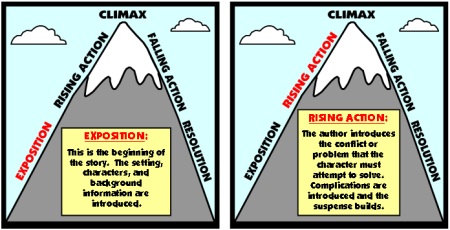
Rising Action: plot build up, caused by conflict and complications, advancement towards climax.
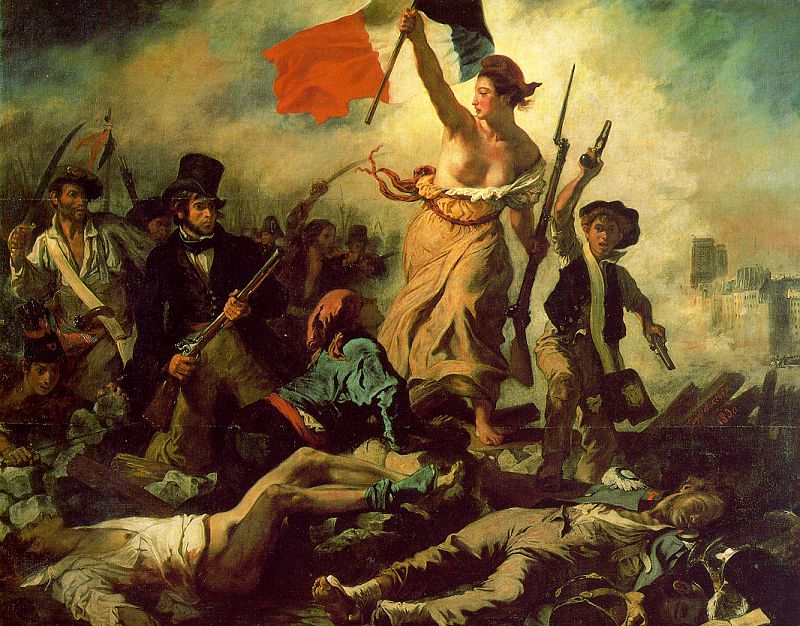
Romanticism: movement in western culture beginning in the eighteenth and peaking in the nineteenth century as a revolt against Classicism; imagination was valued over reason and fact.
Satire: ridicules or condemns the weakness and wrong doings of individuals, groups, institutions, or humanity in general.
Scansion: the analysis of verse in terms of meter.

Setting: the time and place in which events in a short story, novel, play, or narrative poem occur.

Simile: a figure of speech comparing two essentially unlike things through the use of a specific word of comparison.

Soliloquy: an extended speech, usually in a drama, delivered by a character alone on stage.
Spiritual: a folk song, usually on a religious theme.
Speaker: a narrator, the one speaking.
Stereotype: cliché; a simplified, standardized conception with a special meaning and appeal for members of a group; a formula story.

Stream of Consciousness: the style of writing that attempts to imitate the natural flow of a character’s thoughts, feelings, reflections, memories, and mental images, as the character experiences them.

Structure: the planned framework of a literary selection; its apparent organization.

Style: the manner of putting thoughts into words; a characteristic way of writing or speaking.

Subordination: the couching of less important ideas in less important structures of language.
Surrealism: a style in literature and painting that stresses the subconscious or the nonrational aspects of man’s existence characterized by the juxtaposition of the bizarre and the banal.
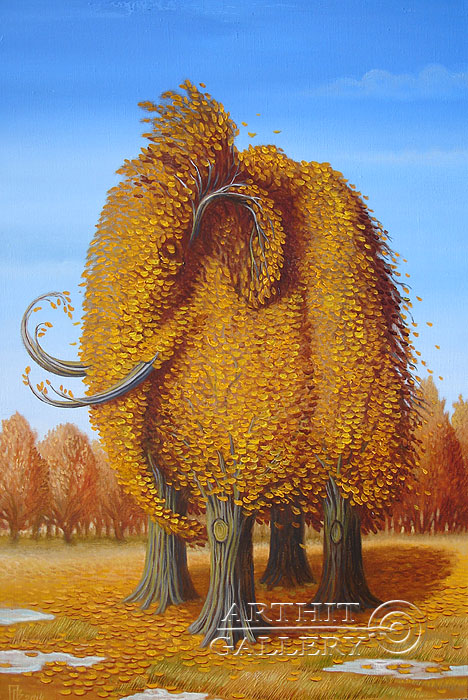
Suspension of Disbelief: suspend not believing in order to enjoy it.
Symbol: something which stands for something else, yet has a meaning of its own.
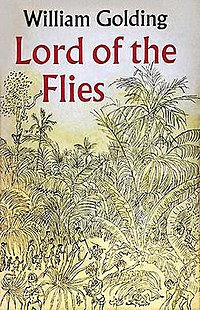
Synesthesia: the use of one sense to convey the experience of another sense.
Synecdoche: another form of name changing, in which a part stands for the whole.

Syntax: the arrangement and grammatical relations of words in a sentence.

Theme: main idea of the story; its message(s).
You mean like this?
Thesis: a proposition for consideration, especially one to be discussed and proved or disproved; the main idea.

Tone: the devices used to create the mood and atmosphere of a literary work; the author’s perceived point of view.
Tongue in Cheek: a type of humor in which the speaker feigns seriousness; a.k.a. “dry” or “dead pan”

Tragedy: in literature: any composition with a somber theme carried to a disastrous conclusion; a fatal event; protagonist usually is heroic but tragically (fatally) flawed

Understatement: opposite of hyperbole; saying less than you mean for emphasis

Vernacular: everyday speech

Voice: The textual features, such as diction and sentence structures, that convey a writer’s or speaker’s pesona.
Zeitgeist: the feeling of a particular era in history

First Quarter Review
A) For this semester, I would probably give myself a B. I've done almost all of the assignments (with the exception of Lit Terms Rising Action-Zeitgeist) and have done them to the best of my ability (at least to me). However, I also have been late on a couple (Lit Terms 31-56, I am Here and Lit Terms 57-82) which for me is unacceptable. Regarding the Senior Project, the musical with Josh, Alex and Co. is already beginning beta stage, and I've been reading up on Dr. Seuss to see which rhyme scheme I like the best.
B) While I have previously said I'm not good at goals, my goal is to stay more prepped and focused for the journey ahead. I feel I went off the beaten path, and it lead me to no where. Fast. Hopefully, that can change.
C) My suggestion for the course is as follows: if we are indeed to read Aldous Huxley's Brave New World, then why not finish off the trifecta? 1984 and Fahrenheit 451 are simply begging to be read in conjunction with Brave New World. To simply read one and not the others is criminal. Another suggestion of mine is to abandon Shakespeare. I like Shakespeare moreso than many others, but it's time to move on. In terms of the course, he's stale old news. He's the Carl Fredrickson to our Russel. Reading Macbeth, while certainly interesting, serves us no real benefit when we've barely moved on to Dickens, and still have a ways to go. Let's be honest. Will reading Shakespeare be more beneficial than reading, say, Tolstoy, Hemingway, Steinbeck, Chekhov, or Poe at this point in time? I really don't think so. And if we *really* wanted to keep things interesting, if not a little creepy, why not add some H.P. Lovecraft? There's a perfect example of a prolix writer who uses way too many synonyms for "grotesque". There are so many great novels post-1500s and yet that's where we seem to be stuck on!
I am Here
I have made some progress towards my SMART goal, but in all honesty, not a lot. I have never been one to set goals, as I tend to forget them, and this case is no different. While I try to prep up for college, it's still difficult to combine that with trying to maintain a classroom environment. I feel you can't have both: a class designed to prep you for college and one intended to teach you everything for a test. It simply leads to a Frankenstein monster of a class that has no real direction, and doesn't do either objective really well. So, in short, I feel like I'm in a rut.
Subscribe to:
Posts (Atom)